
- Call Us 1 306-745-2711
-
Follow Us

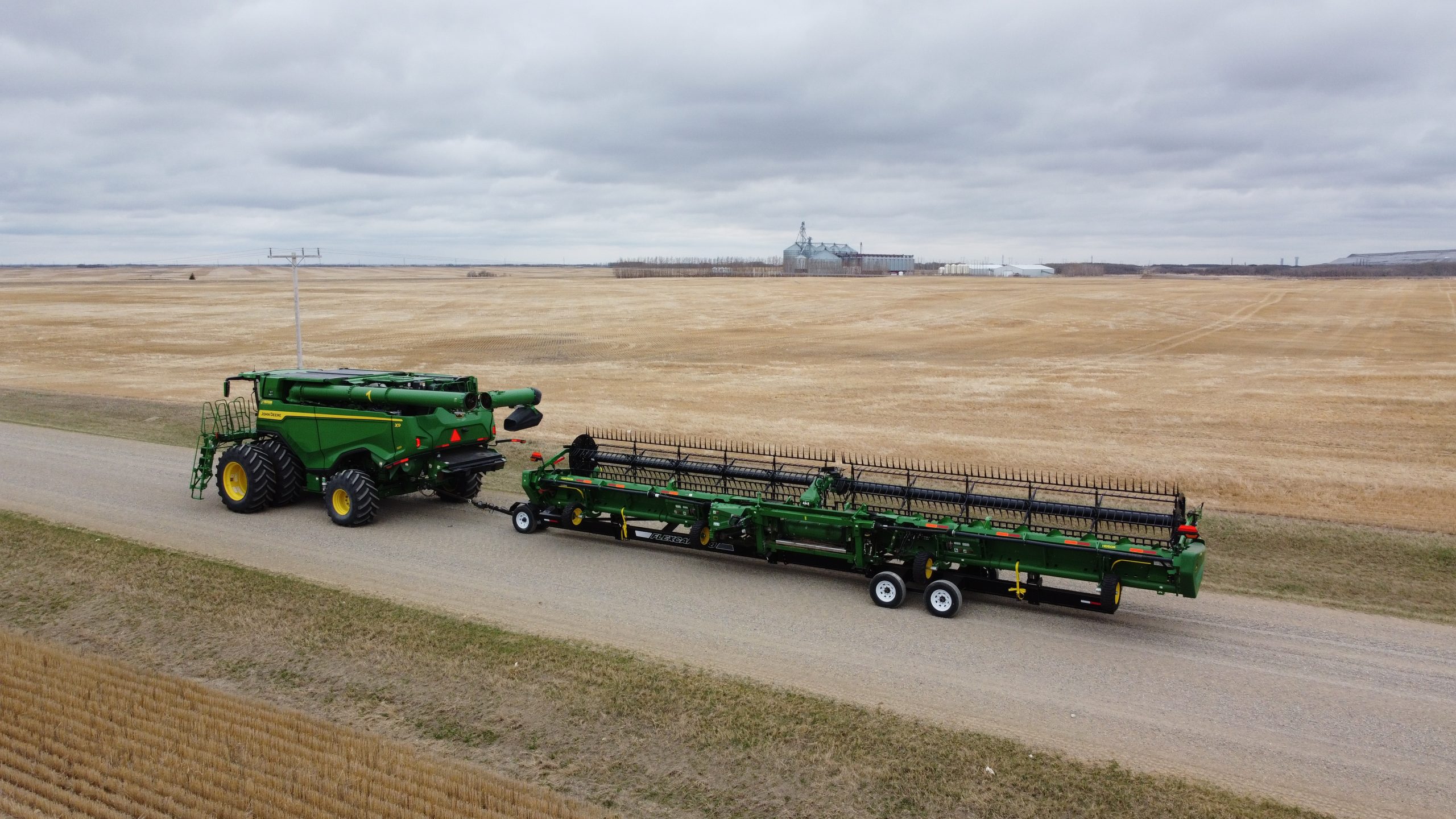
Header Trailer Buying Guide: How to Choose the Right Header
Structural Strength & DurabilityWhen harvest season arrives, every minute counts. You can have the most advanced combine on the market, but if you can’t safely, quickly, and efficiently move your massive header between fields, your entire operation slows to a crawl. A header trailer is a critical link in your harvesting chain.
With modern headers growing wider and heavier, choosing the right transport system is more important than ever. If your trailer fails, your harvest backs up, and that’s money lost.
To help you protect your investment and keep your harvest moving smoothly, we’ve put together this comprehensive header trailer buying guide. Let’s dive into what sets a high-performance transport system apart and how to choose a header trailer that fits your farm perfectly.
1. Structural Strength & Durability
If your header transport bends, sags, or cracks under a heavy load, it won’t get the job done. Your trailer needs to handle long highway hauls, narrow approaches, and the bumpy terrain of a prairie field without twisting.
When considering how to choose your new header trailer, look at the structure. Standard structural tubing can flex under the weight of modern 45-foot and 50-foot headers. Look for heavy-duty features, such as a laminated beam frame, which significantly increase stiffness and fatigue resistance. Rock-solid welds and extensive frame reinforcement ensure your trailer won’t give out when navigating soft soil or steep ditches.
2. Sizing and Fit
To choose the right header trailer starts with a look at your specific header. You can’t rely on total trailer length alone – structural layout is what guarantees a secure haul.
- Weight Distribution: Modern headers have massive center sections or complex drives that create uneven weight distributions. Your trailer needs its frame rails, support saddles, and axles precisely placed to distribute that load evenly.
- Saddle Flexibility: Look for quick-adjust, plastic-lined support saddles (such as those lined with UHMW plastic). They allow you to position the support exactly where your cutterbar needs it while protecting your equipment’s paint from metal-on-metal wear.
- Model-Specific Clearances: If you run specific headers, like a John Deere HD50, look for a trailer engineered with the right axle positioning so you don’t have to remove inner gauge wheels just to go down the road.
3. Suspension, Axles, and Highway Towing Considerations
Transporting a header shouldn’t be a high-stress driving experience. How a trailer handles at highway speeds depends entirely on its suspension and braking components.
- Torsion Suspension: A full Torflex suspension system is essential. It absorbs high-impact road shocks, ensures a smooth ride, and maintains wheel alignment, which prolongs tire life.
- Axle and Tire Capacity: Ensure the trailer employs high-capacity tandem axles (such as dual 8,000 lb axles) paired with heavy-duty, high-ply tires to handle the loaded weight with confidence.
- Braking Power: Electric brakes should come standard on both rear axles to guarantee reliable stopping power when you’re pulling a massive load behind your truck. In general, higher axle capacities also feature larger brakes.
4. Hook-Up Efficiency and Smart Extras
In the middle of harvest, speed and reliability are everything. If you’re fumbling with a clumsy hitch or fighting a manual locking system, you’re wasting valuable time.
Look for features designed to cut down your turnaround time. A telescoping hitch simplifies the hook-up process completely:
- Back up close
- Extend the hitch to couple
- Back up slightly to re-lock it into place
Integrated storage – like built-in compartments for ratchet straps and a secure, spring-loaded compartment inside the frame rail for spare knives – keeps your critical tools organized and exactly where you need them.
The Pre-Quote Buyer Checklist
If you’re ready to upgrade your header transport system, this checklist can help you gather the right information so you can secure a fast, accurate quote and be ready for the season:
- Header Make & Model: Exact brand and model series.
- Header Width: Exact cutting width.
- Estimated Wet Weight: Total weight of the header, including any aftermarket attachments.
- Towing Vehicle Hitch Type: Confirm whether you need a standard 2 5/16″ ball coupler, pintle, or clevis-style hitch.
- Hitch Extension: If you plan to tow your header behind your combine, determine your coupler requirements on both ends (i.e., pintle for combine tow, ball for truck tow).
Invest in Reliability with Bridgeview Manufacturing
When choosing a header trailer, don’t just focus on the upfront price tag – focus on the cost of field downtime. Investing in a heavy-duty, high-performance trailer is an investment in your harvest’s productivity, speed, and safety.
If you’re transporting a 45ft or 50ft header and want a trailer built to handle the haul with absolute ease, take a look at Bridgeview Manufacturing’s Flexcart 48 Header Trailer. Engineered with a 5,800 lb base weight, dual 8,000 lb braked axles, a rugged laminated frame, and a telescoping hitch, it’s built to take the work out of transport.
Ready to secure yours before the season peaks? Contact Bridgeview Manufacturing today or request a custom build quote to get the perfect fit for your operation!